-

Two Molecules, One Test: What ADCs Demand from Identity Testing
ADCs have changed the requirements for identity testing. Unlike conventional monoclonal antibodies, they require manufacturers to confirm two independently variable molecular components within a single therapeutic product while distinguishing that product from an increasingly complex portfolio of related molecules. (more…)
-

Biotherapeutic Identity Testing: From Novel Concept to Mission-Critical Manufacturing Requirement
As biologics portfolios expand, identity testing has shifted from a regulatory checkbox to a mission-critical manufacturing risk — and the tools to manage it have never been more capable. (more…)
-

LFA vs ELISA: How to Choose the Right Diagnostic Method (Sensitivity, Speed & Use Case)
Lateral flow assays (LFA) and enzyme-linked immunosorbent assays (ELISA) are widely used immunoassay techniques. Choosing the right method depends on application, sensitivity, and environment. Both methods have been around for over 50 years, and each has earned a well-deserved place in diagnostics. But they are not interchangeable — ELISA offers high sensitivity, while LFA provides rapid results. Understanding where each excels is critical to selecting the right tool for your application. (more…)
-
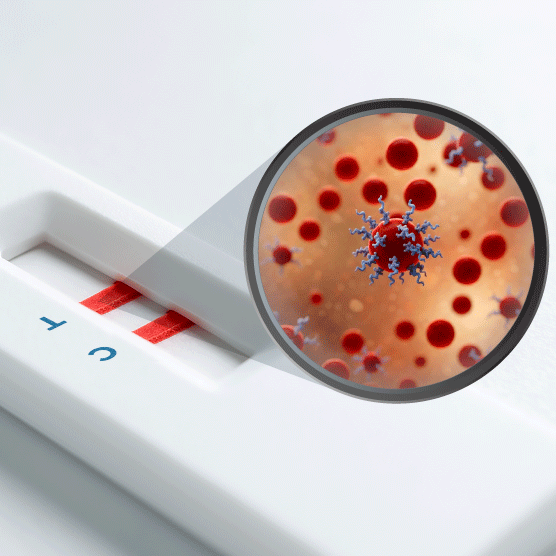
Passive Nanogold Particles: Still the Gold Standard for Lateral Flow Assays
In lateral flow assay (LFA) development, new label technologies emerge every year. While it’s tempting to assume they offer an edge, in reality, most diagnostics teams racing to prototype, validate, and commercialize an assay don’t need more complexity. They need consistency, scalability, and a material that works reliably across many assay formats and manufacturing environments. (more…)